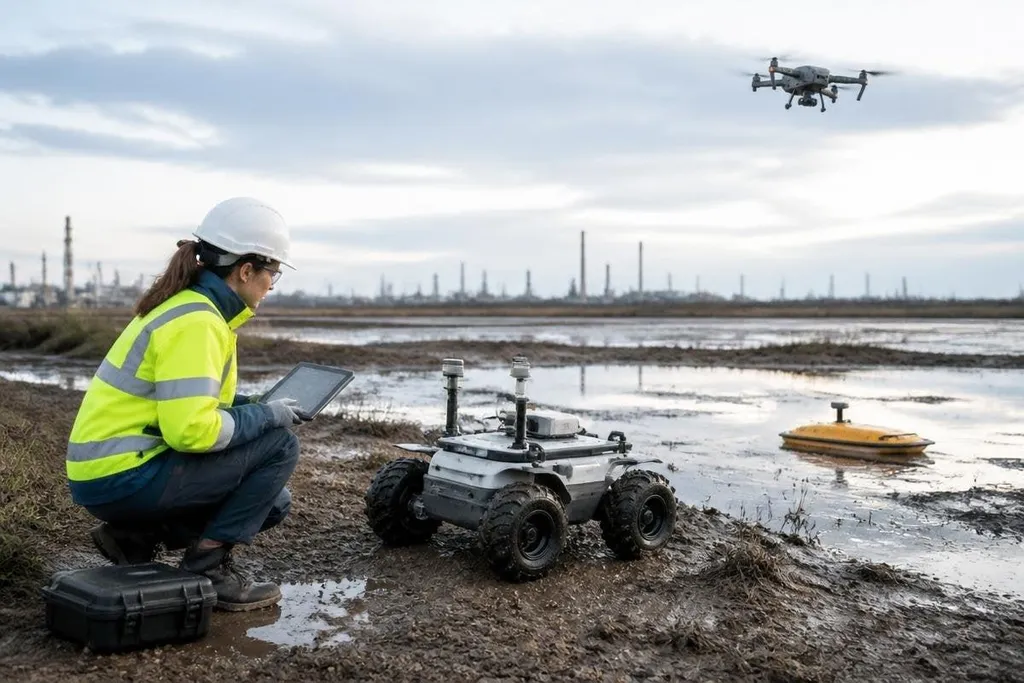
Environmental robots can inspect damaged land, measure water, remove waste, and collect data where people face danger or long hours. Their value depends on the task: a robot that gathers reliable readings can help, while one that cannot handle mud, weather, or poor signals may create extra work.
- Robots keep people away from unstable ground, polluted water, and other hazards.
- Sensors turn hard-to-reach places into data that teams can review.
- Remote operation and recovery plans matter as much as the robot itself.
Where environmental robots help
A ground robot can carry cameras, gas sensors, temperature probes, or water samplers. A drone can inspect a wide area from above. An underwater robot can check structures and collect images without sending a diver into poor visibility.
The useful part is the repeatable work. A robot can follow a planned route, record its position, and attach sensor readings to each point. That gives a field team a map of conditions instead of a small set of manual observations.
Robots also help when the site is unsafe. Chemical spills, damaged buildings, floodwater, steep slopes, and contaminated soil can expose people to falls, toxic material, or unstable surfaces. Remote machines move the first inspection away from the person who would otherwise enter first.
Weather, rough ground, or damaged structures can turn a safe remote inspection into a failed run. Environmental robot field reports can connect a company or research team’s claim to the task, site, test date, and recorded result. Those details lead into the physical limits below.
The limits are physical
Outdoor robots face dirt, water, heat, cold, wind, and uneven ground.
A camera may lose useful detail in rain or dust. A wheel can sink into soft soil. An underwater robot can lose its connection when it moves beyond the range of its cable or radio link.
Battery life also sets the work period. A robot that spends much of its charge climbing, pushing through mud, or sending large image files may return before it finishes the route. The team then needs a charging plan, a spare battery, or a way to recover the machine.
Autonomy adds another limit. Its sensors may detect an obstacle without understanding its importance. A dark patch could be a shadow, deep water, or a hole. The machine needs a safe response when its sensors disagree or its location estimate becomes unreliable.
The risks for people and the environment
The site can be damaged by the robot sent to inspect it. Wheels may crush plants or disturb soil. Propellers can affect birds and other animals. A sampling tool can spread material from one area to another if the team does not clean it between sites.
Data can also mislead. A sensor needs calibration, which means checking its readings against a known reference. Without that check, a clean-looking map may contain errors that affect later decisions.
Remote control brings its own hazards. A lost signal, low battery, blocked camera, or software fault can leave the robot in the wrong place. Safe systems need a stop state, a visible status report, and a recovery method that works without sending a person into danger.
What a sound deployment needs
The machine should fit the site and the task before anyone buys it. Use this checklist when planning a trial:
- Define the reading or task the robot must complete, along with the accuracy needed.
- Check ground, water, weather, and signal conditions at the work site.
- Set a return point for low battery, lost connection, or sensor failure.
- Plan cleaning and handling steps so material does not move between areas.
- Confirm who reviews the data and what action follows an abnormal reading.
- Test recovery with the robot empty before sending it into a hazardous zone.
The checklist also exposes a common mistake: choosing a robot by its size or camera quality before checking how it will be recovered. A machine that gathers good images but cannot return through wet ground may have little use after its first fault.
Choosing the right level of autonomy
Remote operation works well when a person must make a judgment at each obstacle. Assisted autonomy can handle route following while leaving unusual decisions to the operator. Full autonomy needs a clear operating area, tested sensors, and rules for stopping when conditions fall outside the plan.
I'd start with a narrow task that has a clear pass or fail result. That makes it easier to check the sensor data, measure the time saved, and find failure points before the robot takes on a larger area.
Environmental robots are useful when they reduce exposure to hazards or collect information people cannot gather safely. The next step is to test the complete work system, including launch, control, cleaning, data review, and recovery, rather than judging the machine from a short demonstration.